
Why Wallet-Based Taxi Systems Are the Future of Driver Payments
The way taxi companies manage driver payments is undergoing a major transformation. For decades, the standard approach has been centralized payment handling, where companies collect fares and distribute earnings to drivers on a weekly basis. While this method has been widely used, it comes with significant challenges, including administrative complexity, delayed payments, and high operational costs.
A new model is emerging that addresses these issues more effectively—the wallet-based system. This approach changes how money flows within the taxi ecosystem, making it more efficient for both operators and drivers.

In a wallet-based system, drivers maintain a prepaid balance within the platform. Instead of being billed at the end of the week, they recharge their wallet in advance. Each time they complete a trip, a small fee is automatically deducted from their balance. This can include platform usage charges, booking fees, or subscription components.
One of the biggest advantages of this system is the elimination of invoicing. Taxi companies no longer need to generate weekly invoices, track payments, or follow up with drivers for outstanding balances. All transactions are handled automatically within the system, reducing administrative workload and improving cash flow.
For drivers, this model provides more transparency and control. They can see exactly how much they are being charged per trip and manage their expenses in real time. There are no surprises at the end of the week, and no confusion about deductions.
Another key benefit is operational simplicity. Since drivers pay upfront, companies receive their revenue instantly. This removes the risk of delayed payments and ensures consistent income for the platform.
The pay-as-you-go nature of wallet systems also aligns with how modern gig economy platforms operate. Drivers only pay when they are actively using the system, making it a fair and flexible model.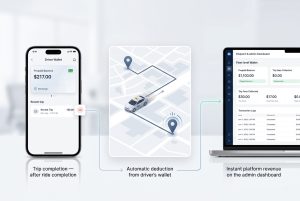
In addition, this approach supports scalability. As taxi businesses grow, managing payments for a large number of drivers becomes increasingly complex. A wallet-based system handles this automatically, allowing companies to expand without adding administrative burden.
From a strategic perspective, this model also opens new revenue opportunities. By combining wallet-based payments with per-booking fees, companies can create a sustainable income stream that grows with usage.
In conclusion, wallet-based taxi systems represent a significant step forward in how driver payments are managed. They simplify operations, improve transparency, and provide a scalable foundation for modern taxi businesses. As the industry continues to evolve, this model is likely to become the standard for forward-thinking operators.