The Smartest Way for Taxi Companies in New Zealand & Australia to Increase Revenue in 2026
The taxi industry across New Zealand and Australia is quietly going through a major shift. While demand for transport services continues to grow across cities like Auckland, Christchurch, Queenstown, Sydney, and Melbourne, many taxi companies are still operating on outdated systems that limit their growth, reduce efficiency, and increase operational costs.
Most operators today are using traditional dispatch platforms that were built for a different era—systems that depend heavily on manual processes, fixed billing cycles, and administrative overhead. These systems may still function, but they are no longer optimized for modern business realities where speed, automation, and financial efficiency are critical.
At the same time, global ride-hailing platforms have changed customer expectations. Passengers now expect real-time booking, transparent pricing, seamless payments, and fast service. However, what many taxi companies have not fully adopted yet is the business model behind these platforms—particularly how they generate consistent revenue beyond just fares.
This gap presents a major opportunity for taxi operators who are ready to upgrade.
🚖 Moving Beyond Traditional Dispatch Systems
In many taxi businesses today, the operational model still revolves around weekly invoicing, manual accounting, and centralized payment handling. Companies collect payments, manage accounts, calculate driver earnings, and then distribute payments weekly.
While this approach has worked in the past, it comes with hidden costs. Managing accounts, tracking invoices, handling disputes, and ensuring timely payments requires administrative effort and staff. Over time, these operational costs grow and directly impact profitability.
In addition, chasing payments or managing delayed settlements becomes a recurring challenge. Even when systems are digital, the financial workflow remains complex and resource-intensive.
Modern mobility platforms are solving this problem by completely changing how money flows within the system.
💡 A Smarter Revenue Model: Booking Fees & Pay-As-You-Go Systems
One of the most powerful shifts in the industry is the introduction of per-booking revenue models. Instead of relying only on subscriptions or manual invoicing, taxi companies can now generate income from every single booking completed on their platform.
This is done through a small booking fee or convenience charge applied automatically to each trip. While this model is widely used in global ride-hailing platforms, it has not yet been fully adopted by many local taxi operators in New Zealand and Australia.
By implementing this approach, taxi companies create a steady and predictable revenue stream that grows with usage. The more trips completed, the more the business earns—without increasing operational complexity.
But this is only one part of the transformation.

🔄 Eliminating Invoicing with a Wallet-Based Driver System
Another major advancement is the introduction of a driver wallet system, designed to eliminate the need for traditional invoicing and payment tracking.
In this model, drivers maintain a prepaid wallet within the system. Instead of the company chasing payments or managing weekly billing cycles, drivers simply recharge their wallet balance in advance.
Each time a booking is completed, a small fee is automatically deducted from the driver’s wallet. This includes:
- Booking or convenience fee per trip
- Platform usage charges
- Optional subscription components
As the wallet balance reduces, drivers continue operating normally. Once the balance reaches a minimum level, the system prompts them to recharge. If the wallet runs out completely, access to the system is paused until the balance is topped up again.
This creates a true pay-as-you-go model, where:
- Drivers pay only when they are actively working
- Companies receive payments upfront
- No invoicing, no chasing payments, no delays
The result is a cleaner, more efficient financial system that reduces administrative workload and improves cash flow.
💰 Direct Earnings for Drivers, Simplified Operations for Companies
In this system, fare payments from passengers go directly to the driver, removing the need for the company to act as a financial intermediary. This simplifies operations significantly.
Taxi companies no longer need to:
- Hold large amounts of money in accounts
- Process weekly payouts
- Manage complex financial reconciliations
- Handle disputes related to delayed payments
Instead, the platform focuses on enabling operations, while revenue is generated through system usage.
This model not only reduces costs but also improves transparency and trust between drivers and operators.
📱 One Platform, Multiple Services
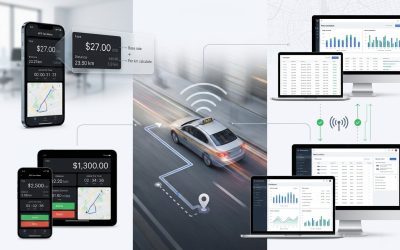
Modern taxi platforms are no longer limited to standard point-to-point rides. A well-designed system allows operators to offer multiple services within the same platform, including:
- Standard taxi bookings
- Scheduled rides
- Outstation or long-distance trips
- Tourism and private hire services
This flexibility allows taxi businesses to expand their offerings without investing in separate systems. It also creates additional revenue opportunities by utilizing the same fleet across different service categories.
For example, tourism services can be integrated as an optional extension, allowing companies to connect with existing travel platforms or operate their own packages.
🚀 The Rise of Ride-Bidding Models
Another innovation gaining attention is the ride-bidding system, where drivers can accept or bid on rides based on their availability and preferences.
This approach provides greater flexibility for drivers while ensuring competitive pricing for passengers. It also increases driver engagement, as they have more control over the trips they accept.
Combined with standard booking systems, this creates a hybrid model that adapts to different market needs across cities and regions.
🌏 Built for New Zealand & Australia Market Conditions
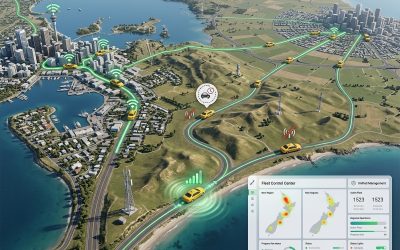
Taxi operations in New Zealand and Australia come with unique challenges, including varying demand patterns, regional connectivity issues, and diverse service requirements across urban and tourist areas.
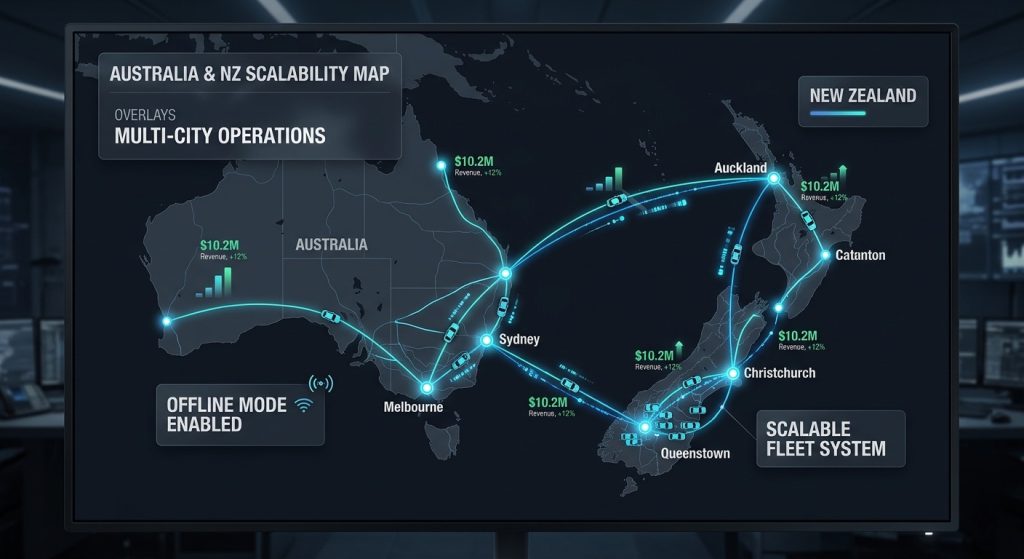
A modern platform must be designed with these conditions in mind. Features such as offline capability, real-time GPS tracking, and flexible pricing models are essential for ensuring consistent performance across different environments.
Cities like Auckland and Sydney require high-volume, fast-response systems, while regions like Queenstown or Rotorua demand flexibility for tourism-driven services.
A scalable platform ensures that businesses can operate efficiently across all these environments without needing multiple systems.
📊 Reducing Costs While Increasing Profitability
The combination of booking fees, wallet-based payments, and automated operations creates a powerful financial advantage.
Taxi companies can:
- Generate revenue from every trip
- Eliminate manual invoicing processes
- Reduce administrative staffing costs
- Improve cash flow with prepaid systems
- Scale operations without increasing overhead
Over time, this leads to a more sustainable and profitable business model compared to traditional systems.
🔐 A More Reliable and Controlled System
With automated deductions and prepaid usage, companies gain full control over their platform operations. There is no dependency on delayed payments or external financial processes.
Everything is managed within the system, ensuring:
- Consistent revenue collection
- Transparent transactions
- Reduced financial risk
- Better operational control
This level of control is essential for businesses looking to grow without increasing complexity.
🏁 The Future of Taxi Businesses in NZ & Australia
The taxi industry is not declining—it is evolving. Companies that adapt to modern technology and smarter business models are seeing stronger growth, better efficiency, and improved profitability.
The shift is not just about adopting new software. It is about adopting a better way of operating—one that reduces effort, increases revenue, and supports long-term scalability.
Taxi companies that continue relying on traditional systems will find it increasingly difficult to compete with more agile, tech-enabled operators.
On the other hand, businesses that embrace modern dispatch platforms with wallet-based systems, booking fee models, and flexible service offerings will be better positioned to lead the next phase of the industry.
📩 Final Thought
For taxi operators across New Zealand and Australia, the opportunity is clear. The tools to build a more efficient, scalable, and profitable business already exist. The only question is how quickly businesses are willing to adopt them.
Those who move early will not just keep up with the market—they will define it.